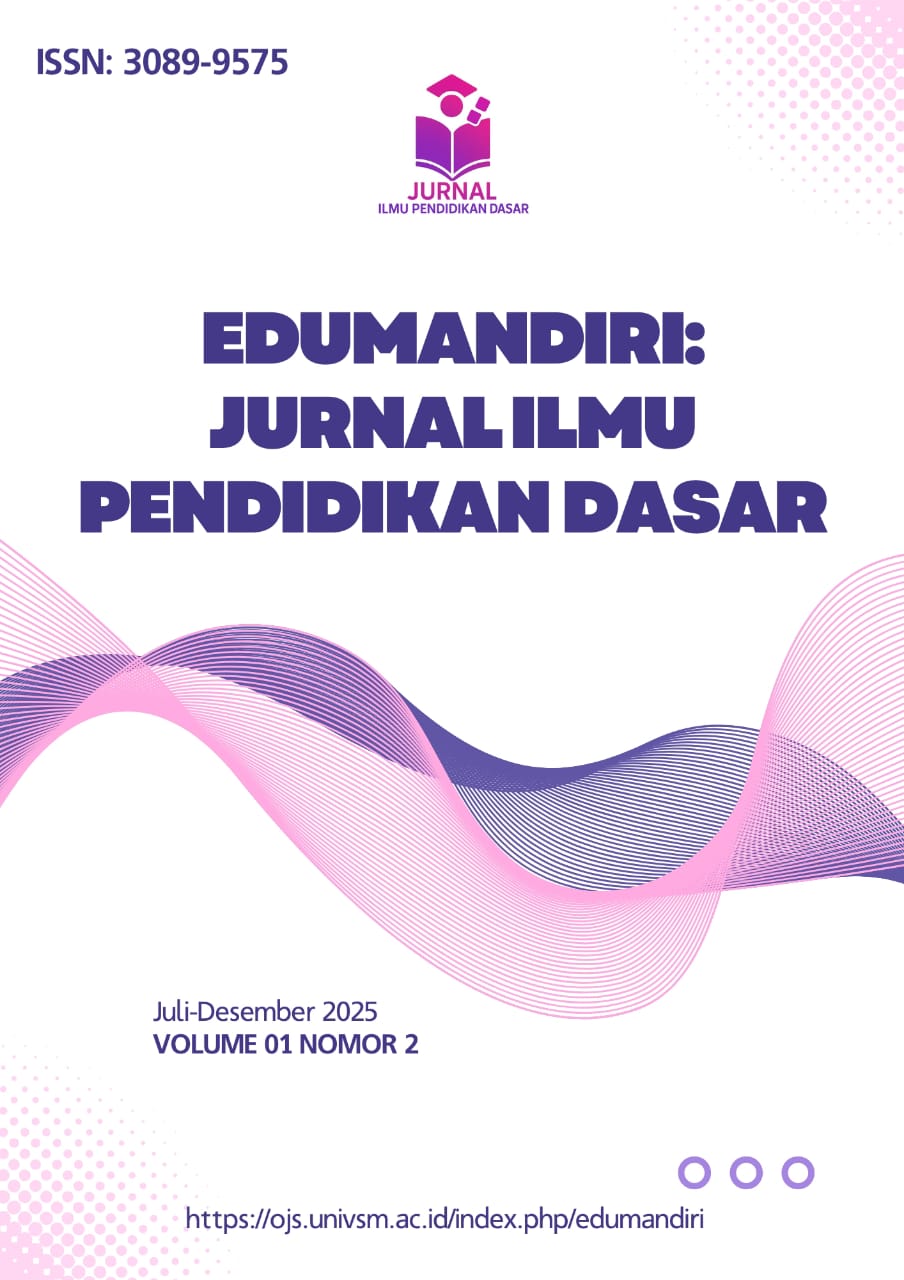
Analisis Model Cooperatif Learning Tipe Stad Pembelajaran PPKN Kelas V SDN 08 Kayu Bunga
DOI:
https://doi.org/10.65369/m1emc153Abstract
The purpose of this study is to analyze the use of the Cooperative Learning model of the Student Teams Achievement Division (STAD) type in Civics Education (PPkn) instruction for Grade V at SDN 08 Kayu Bunga.This research uses a qualitative method, specifically a descriptive qualitative research design. The main subjects in this study are fifteen grade students from SDN 08 Kayu Bunga, consisting of seven female and eight male students. The dataset used in this research were obtained through data reduction, data presentation, and conclusion drawing. The data collected are qualitative in nature, prividing a descriptive account That way, I can help you better with summarizing or analyzing the results of observations and interviews related to it experiences and understanding of using the learning model, as well as the challenges and solutions in applying the learning model in Civics (PPKn) learning.This research was conducted in the fifth grade of SDN 08 Kayu Bunga. The findings from the study show that the experience and understanding of applying the Cooperative Learning approach, specifically the Student Teams Achievement Division (STAD) type, created a more lively classroom atmosphere and increased student engagement. In planning the learning model, the material was delivered according to the students’ abilities, and group division was done heterogeneously. During the implementation of the learning model, students were required to participate by contributing their own ideas to complete the assigned tasks. The challenges encountered included students who were not yet accustomed to using the learning model and the varying abilities of the student. Solutions to these challenges included providing motivation to students who lacked self-confidence and offering guidance from their group members.
Downloads
Downloads
Published
Issue
Section
License
Copyright (c) 2025 Jurnal Ilmu Pendidikan Dasar

This work is licensed under a Creative Commons Attribution 4.0 International License.